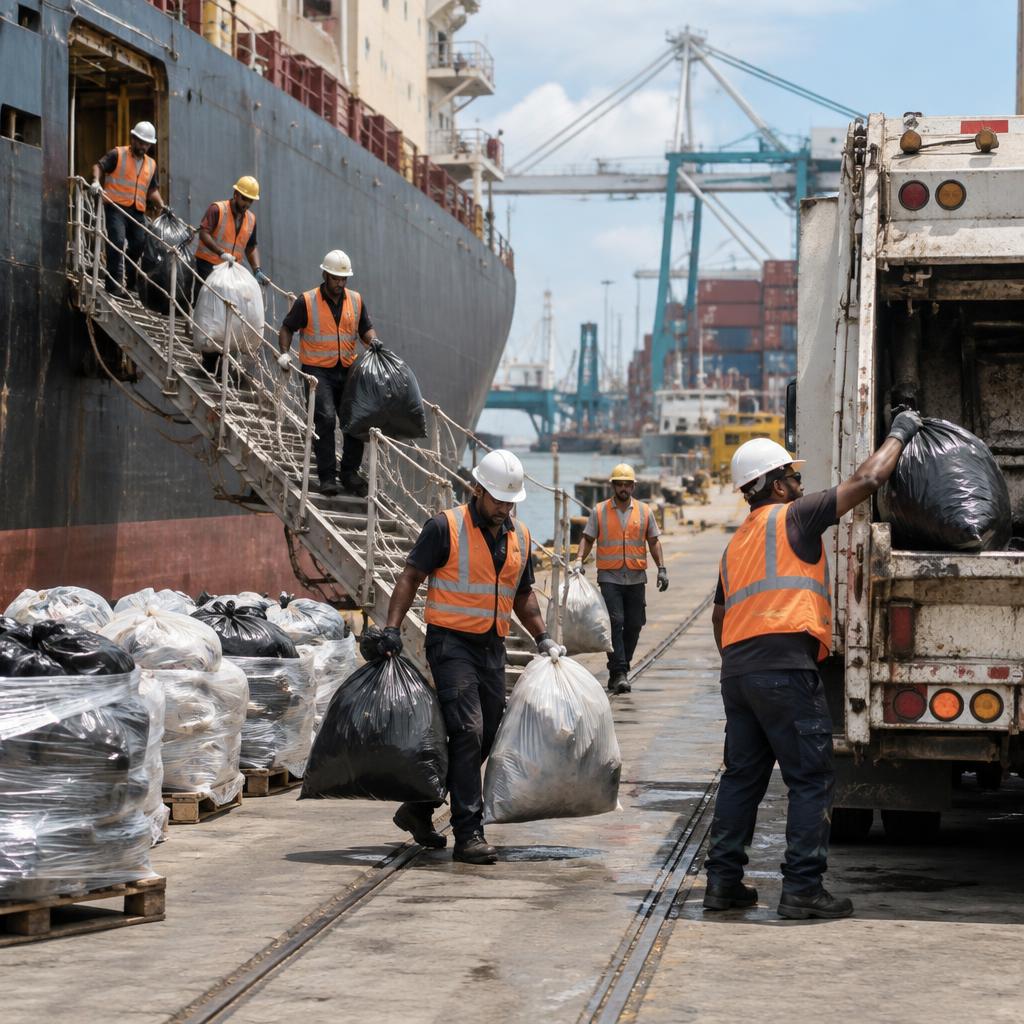
Under MARPOL Annex V, most ship-generated garbage — plastics, food waste, cooking oil, and operational waste — cannot be discharged at sea. That makes your port call the one realistic window to offload it legally, and the port reception facility you choose matters.
At Prime Maritime Services, compliant waste removal is our core business. Here's what we see vessels get right — and wrong — when planning disposal.
Plan disposal before you berth
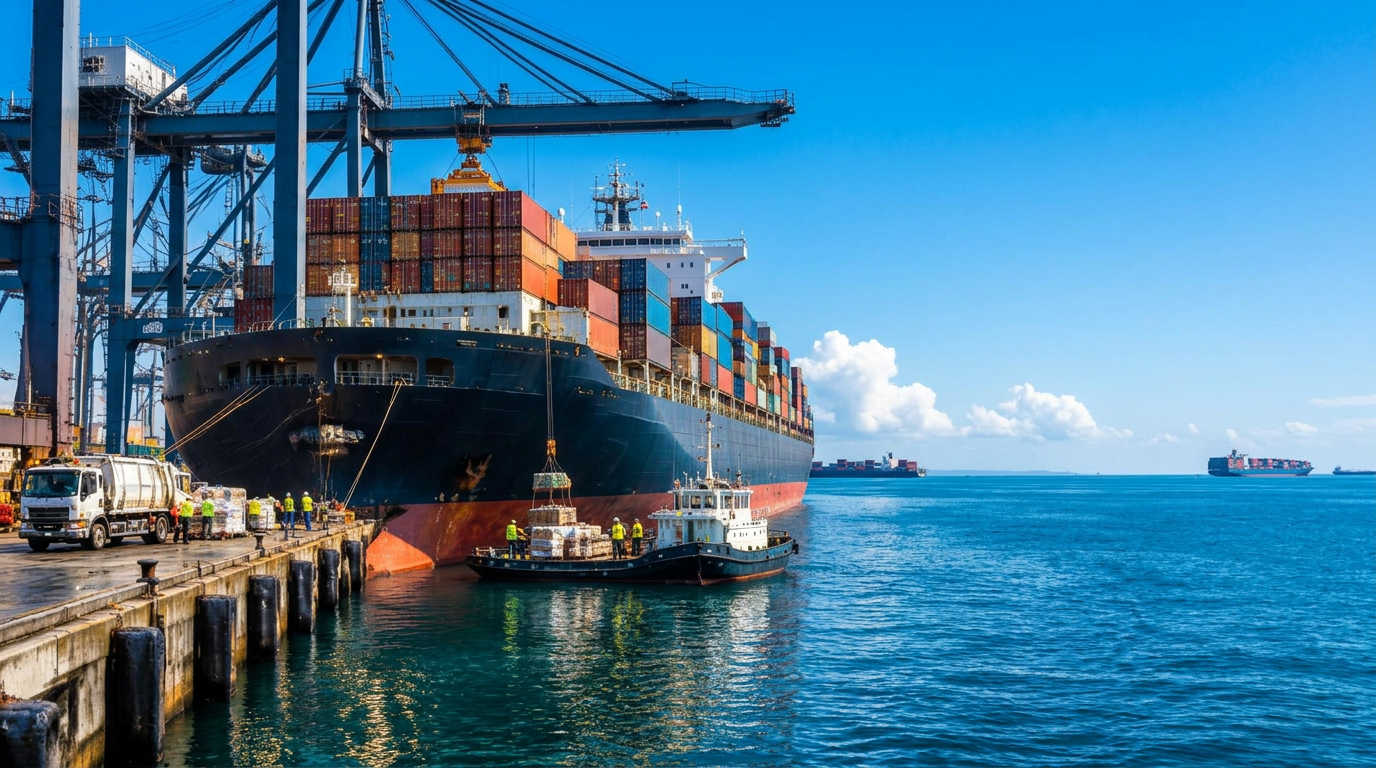
Ports expect advance notification of waste delivery, often 24 hours before arrival. Sending your waste declaration early lets us pre-stage trucks and containers at your berth so removal starts the moment you're alongside — not hours into your cargo window.
Segregate on board
Mixed waste loads cost more and take longer. Segregating plastics, food waste, recyclables, and hazardous streams on board means faster collection, lower fees, and cleaner documentation for your Garbage Record Book.
- Plastics and synthetic ropes — never dischargeable
- Food waste and cooking oil
- Recyclables: glass, metal, paper, cardboard
- Operational and hazardous waste requiring special handling
Keep your paperwork audit-ready
Every delivery should come with a waste delivery receipt, and entries in your Garbage Record Book should match it exactly. Port State Control inspectors check both — mismatches are one of the most common Annex V deficiencies we help vessels avoid.
One call covers the whole port call
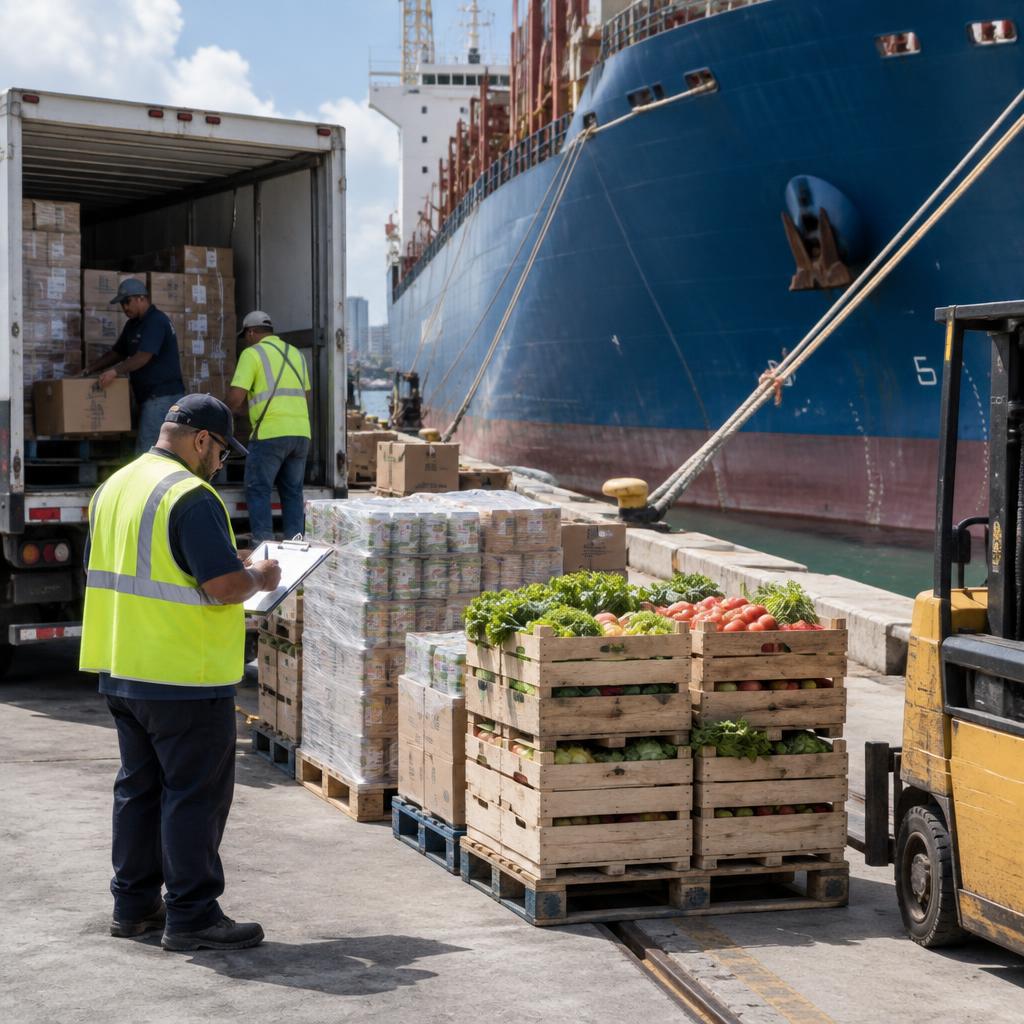
Waste removal and provisioning scheduled together means one point of contact, one launch window, and no surprises. That's how we run every port call at Prime Maritime Services.
Need A Hand With Your Port Call?
Licensed, insured, and available 24/7. Get a fast, no-pressure quote for your vessel.